Grass That Receives Water and Nutrients
Dethatching in Idaho Falls for lawns with excessive organic buildup blocking soil contact
Thatch accumulates when dead grass stems, roots, and organic debris build up faster than soil microbes can decompose them, creating a dense layer between green grass blades and the soil surface. RIG Lawn Care and Snow Removal removes this layer through dethatching service in Idaho Falls, Rigby, Ammon, and surrounding areas using specialized equipment that pulls the matted material out of the lawn and brings it to the surface for removal. When thatch exceeds half an inch in thickness, it forms a barrier that prevents water from reaching roots, blocks air circulation to the soil, and creates a spongy surface that harbors fungal diseases.
Dethatching becomes necessary when you notice water pooling on the lawn surface during irrigation, when the ground feels bouncy underfoot, or when grass appears thin despite regular watering and fertilization. The service is particularly important during spring and fall in Idaho Falls, when preparing lawns for active growth periods or helping them recover from seasonal stress.
Request a thatch depth assessment to determine whether your lawn requires dethatching this season.
Why Thatch Happens and How to Stop It
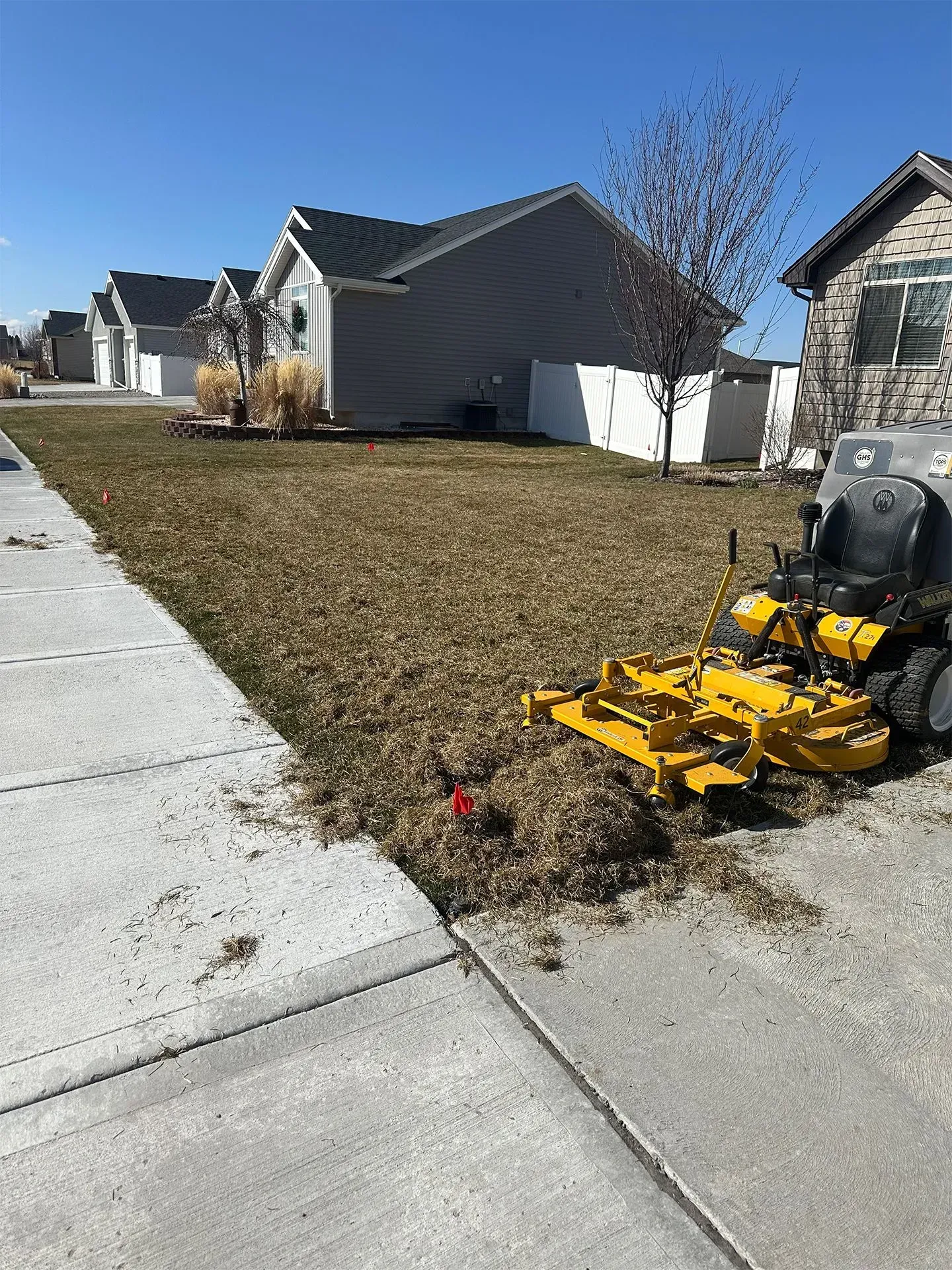
Thatch forms when grass produces organic matter faster than decomposition occurs, which happens frequently in lawns that receive heavy fertilization, in areas with clay soil where microbial activity is slower, and in turf types that naturally produce dense root systems. The dethatching machine uses vertical blades or spring tines that penetrate the thatch layer, pull it upward, and break it apart so the material can be raked away. The process leaves the lawn looking temporarily rough, with loosened debris covering the surface until cleanup removes it.
Once thatch is removed, water soaks directly into soil instead of sitting in the organic mat, fertilizer reaches grass roots where it's actually used, and air circulates to the soil surface where it supports beneficial microbe populations. You'll notice that irrigation water disappears into the ground quickly rather than pooling, and grass color improves within two to three weeks as roots access nutrients more effectively.
Dethatching creates temporary stress on the lawn, so timing matters—early spring service allows grass to recover during the growing season, while early fall dethatching prepares turf to absorb autumn moisture and store energy before winter. Lawns should be watered thoroughly for several weeks after dethatching to support new root growth into the newly exposed soil.
Common Questions About This Service
Dethatching produces immediate visible changes in lawn surface condition and how grass responds to water and treatments, especially in Idaho Falls where irrigation practices and soil types affect thatch accumulation rates.
RIG Lawn Care and Snow Removal evaluates thatch depth before recommending service, since unnecessary dethatching can damage lawns that don't actually have buildup problems. Book a lawn assessment to check whether thatch is preventing your grass from accessing water and nutrients.
What does the lawn look like immediately after dethatching?
The surface appears torn up with brown debris covering the grass, visible grooves where equipment blades penetrated the turf, and thin spots where thick thatch was removed, but green growth fills in these areas within three to four weeks as grass recovers.
How is thatch different from grass clippings left after mowing?
Thatch consists of dead stems, roots, and partially decomposed plant tissue that forms a dense mat at the soil surface, while grass clippings are fresh material that breaks down quickly and returns nitrogen to the soil without creating buildup.
When should dethatching be performed in Idaho Falls?
Early May allows grass to recover during peak growing season, while early September provides a second window before winter, with timing adjusted to avoid dethatching during drought stress or extreme heat when grass can't recover quickly.
Why does excessive thatch prevent healthy lawn growth?
The layer physically blocks water from reaching soil, traps moisture against grass crowns where it promotes fungal disease, prevents fertilizer from contacting roots, and creates an environment where grass roots grow horizontally in the thatch rather than vertically into soil.
How often do lawns need dethatching service?
Most residential lawns benefit from dethatching every two to three years depending on grass type and fertilization intensity, with annual service required only for turf that produces thatch rapidly or lawns where previous buildup was severe.