Soil That Actually Absorbs Water Again
Lawn Aeration in Idaho Falls for compacted turf exposed to foot traffic and dry summer conditions
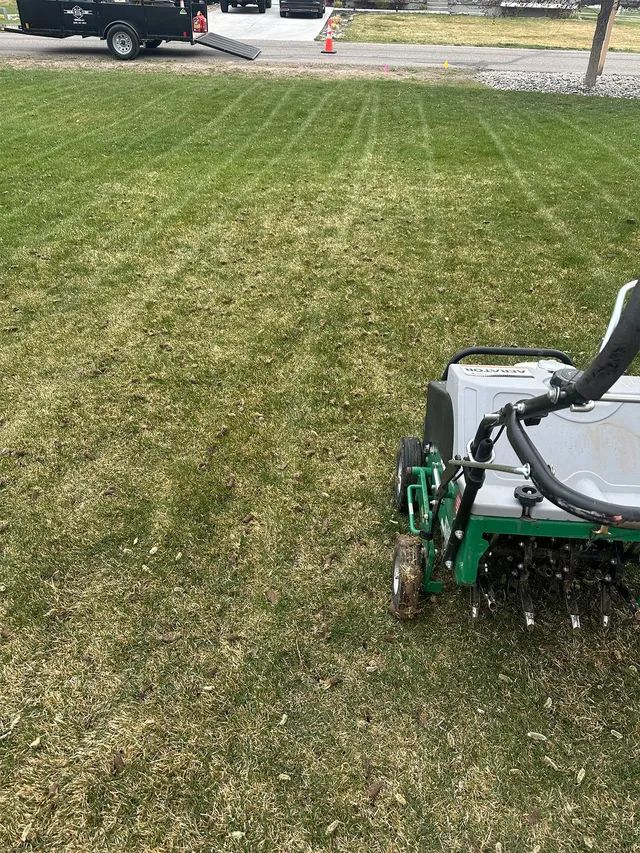
Compacted soil prevents water from penetrating below the surface, leaving grass roots shallow and vulnerable to heat stress during Idaho's dry summer months. RIG Lawn Care and Snow Removal provides lawn aeration in Idaho Falls, Iona, Rigby, and surrounding areas by mechanically removing small soil cores throughout your lawn, creating channels that allow oxygen, water, and nutrients to reach root zones where grass actually grows. You'll see the cores sitting on the surface after aeration—they break down naturally within a few weeks and return organic matter to the soil.
Aeration reverses the compression that occurs when foot traffic, mower wheels, and settling soil squeeze air pockets out of the ground. Once soil is compacted, roots can't expand, water runs off instead of soaking in, and fertilizer sits on the surface rather than reaching the root zone. Aeration is especially important in Eastern Idaho where clay content in soil increases compaction tendency and where irrigation water doesn't penetrate effectively without open pathways.
Schedule a lawn evaluation to determine whether your soil density requires aeration this season.
How Aeration Addresses Compaction
The aeration process uses a machine that pulls plugs of soil from the ground at regular intervals, typically two to three inches deep and spaced a few inches apart across the entire lawn. These holes remain open even as the extracted cores break down, providing permanent pathways until natural soil movement gradually closes them over time. Aeration timing matters—spring aeration supports root development before summer heat arrives, while fall aeration helps lawns recover from seasonal stress and absorb moisture before winter.
After aeration, water visibly soaks into the ground faster instead of puddling on the surface, and grass develops deeper roots that access moisture reserves during dry periods. Lawns respond to fertilizer applications more noticeably because nutrients reach root zones rather than washing away. RIG Lawn Care and Snow Removal recommends aeration when lawns show signs of compaction such as water runoff during irrigation, thin turf growth despite watering, or hard soil that resists penetration.
Aeration works best when soil contains some moisture but isn't saturated, so scheduling typically occurs in late spring after soil dries from snowmelt or in early fall when irrigation keeps ground workable. Heavy clay soils benefit from annual aeration, while sandier soils may only require service every other year depending on traffic patterns.
Answers to Frequent Service Questions
Lawn aeration produces visible changes in how Idaho Falls properties handle water and support grass growth, especially where soil composition and climate create compaction challenges.
RIG Lawn Care and Snow Removal schedules aeration based on soil conditions and lawn stress indicators visible on your property. Arrange an on-site evaluation to assess whether compaction is limiting your lawn's ability to absorb water and nutrients effectively.
What are the soil cores left on the lawn after aeration?
The cores are plugs of actual soil and thatch pulled from your lawn, typically half an inch in diameter and two to three inches long, which dry out and break apart over the following two to three weeks as mowing and weather crumble them back into the turf.
When is the best time to aerate lawns in Idaho Falls?
Late April through May allows aeration before peak summer heat stress, while September provides a second window that helps lawns recover from summer and absorb fall moisture, with timing adjusted based on whether your grass is cool-season or warm-season variety.
How does aeration help lawns handle Idaho's dry summer conditions?
Deeper root systems developed after aeration reach moisture that remains in soil even when surface layers dry out, reducing how often you need to irrigate and helping grass survive stretches between watering without browning.
Why does compacted soil prevent grass growth?
Compressed soil particles eliminate air pockets that roots need for oxygen exchange, create physical resistance that stops roots from expanding, and form a barrier that water cannot penetrate to reach the root zone.
What results should I expect after aeration service?
Within four to six weeks, grass typically shows thicker growth, greener color response to watering, and stronger resilience when walked on, with the most noticeable improvement appearing during the next growing season as deeper roots establish.